

Exhibitions
TAPETATES @ Instituto de Vision Gallery
SOLO SHOW
09.2025 – 11.2025
Instituto de Vision Gallery 88 Eldridge Street, 5th Floor New York, NY 10002
Opening: September 5th, 2025
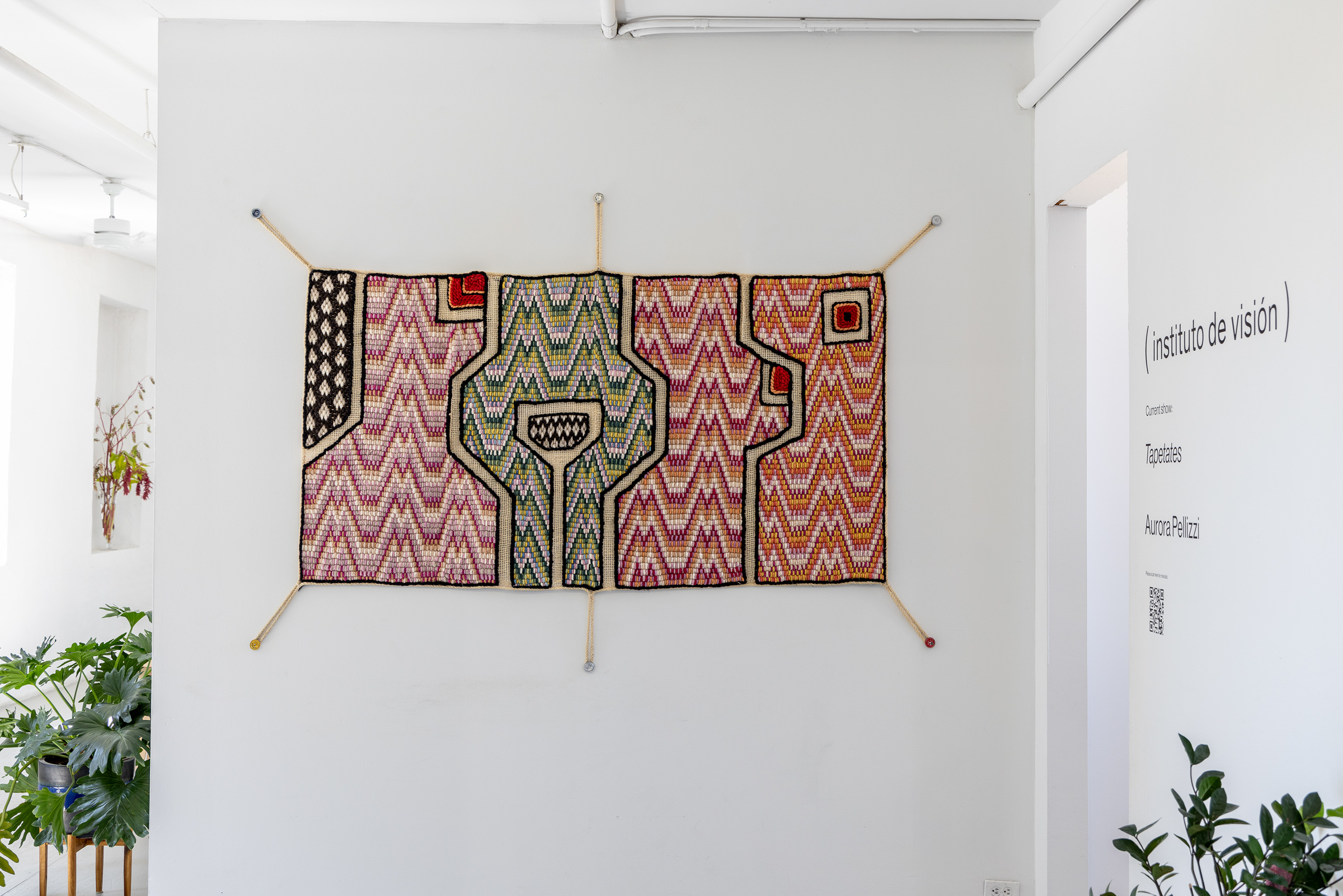
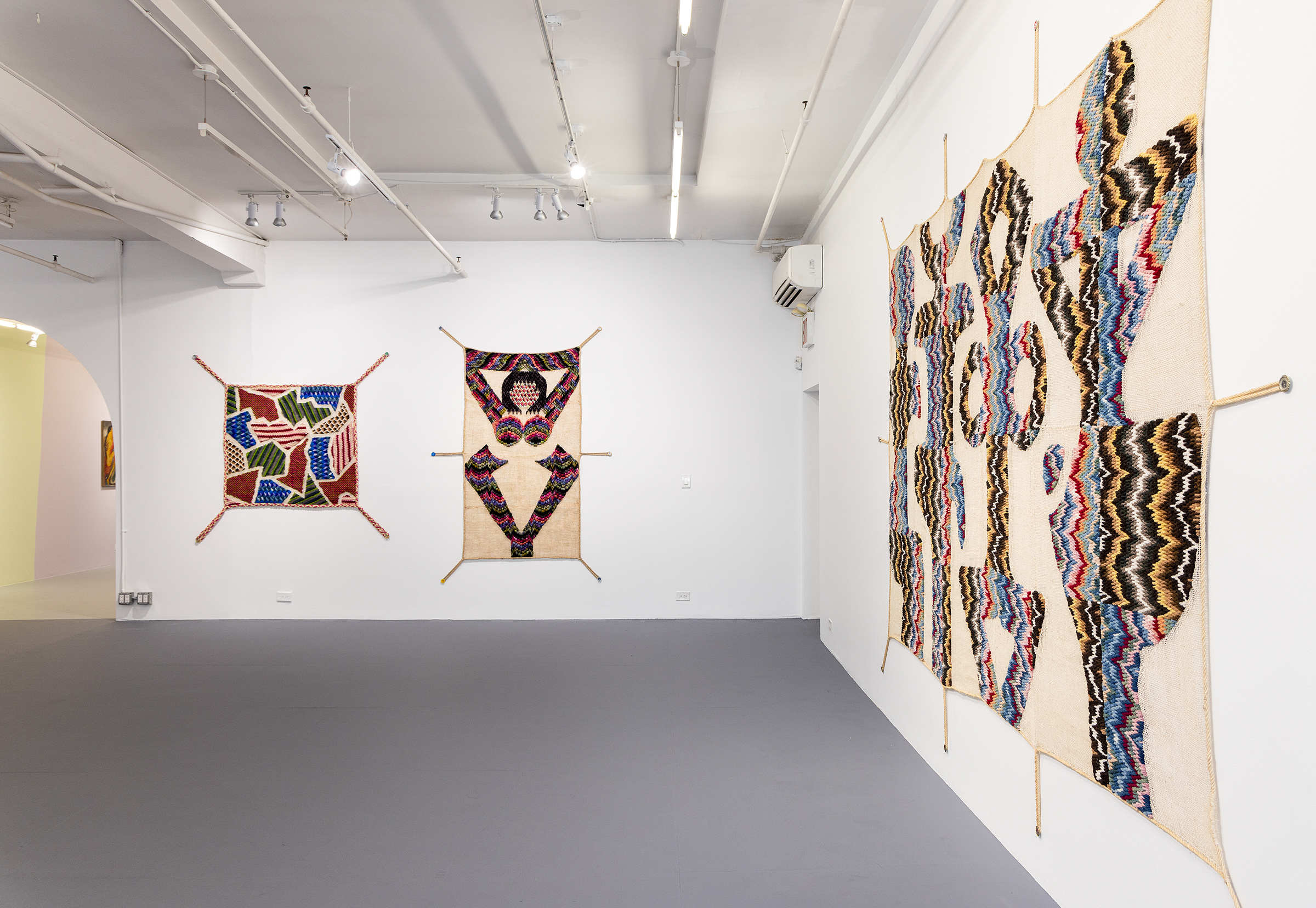
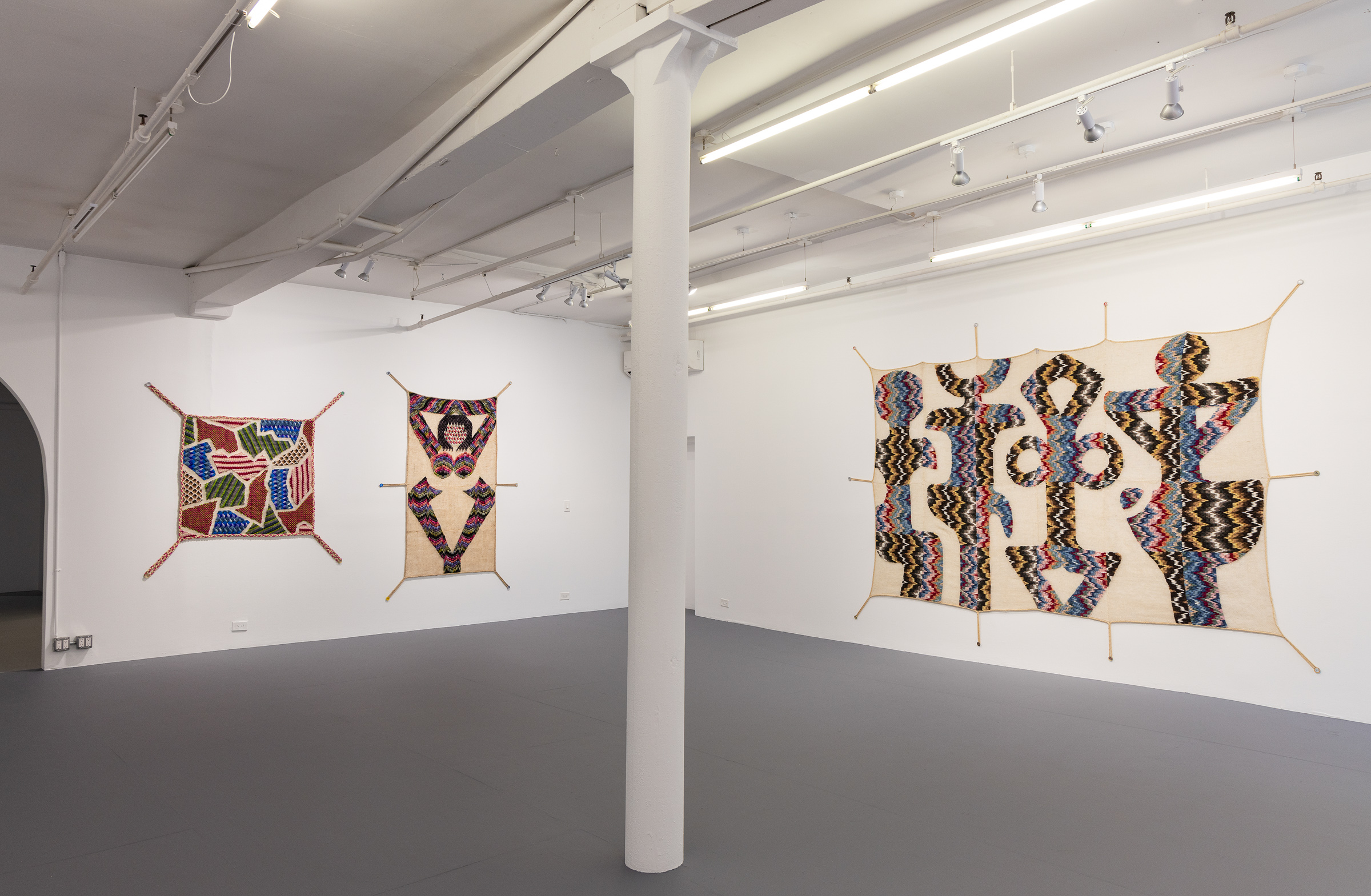
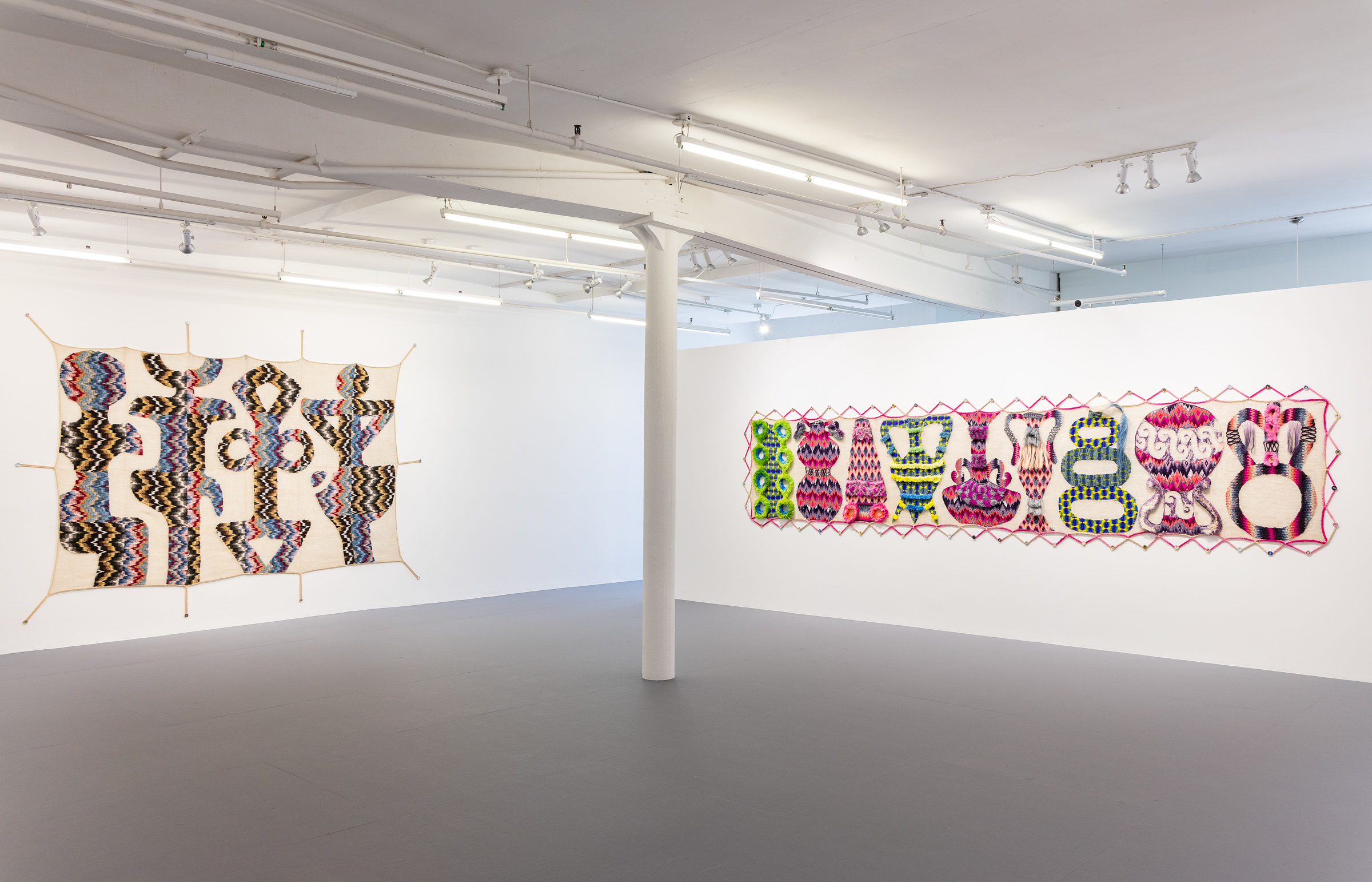
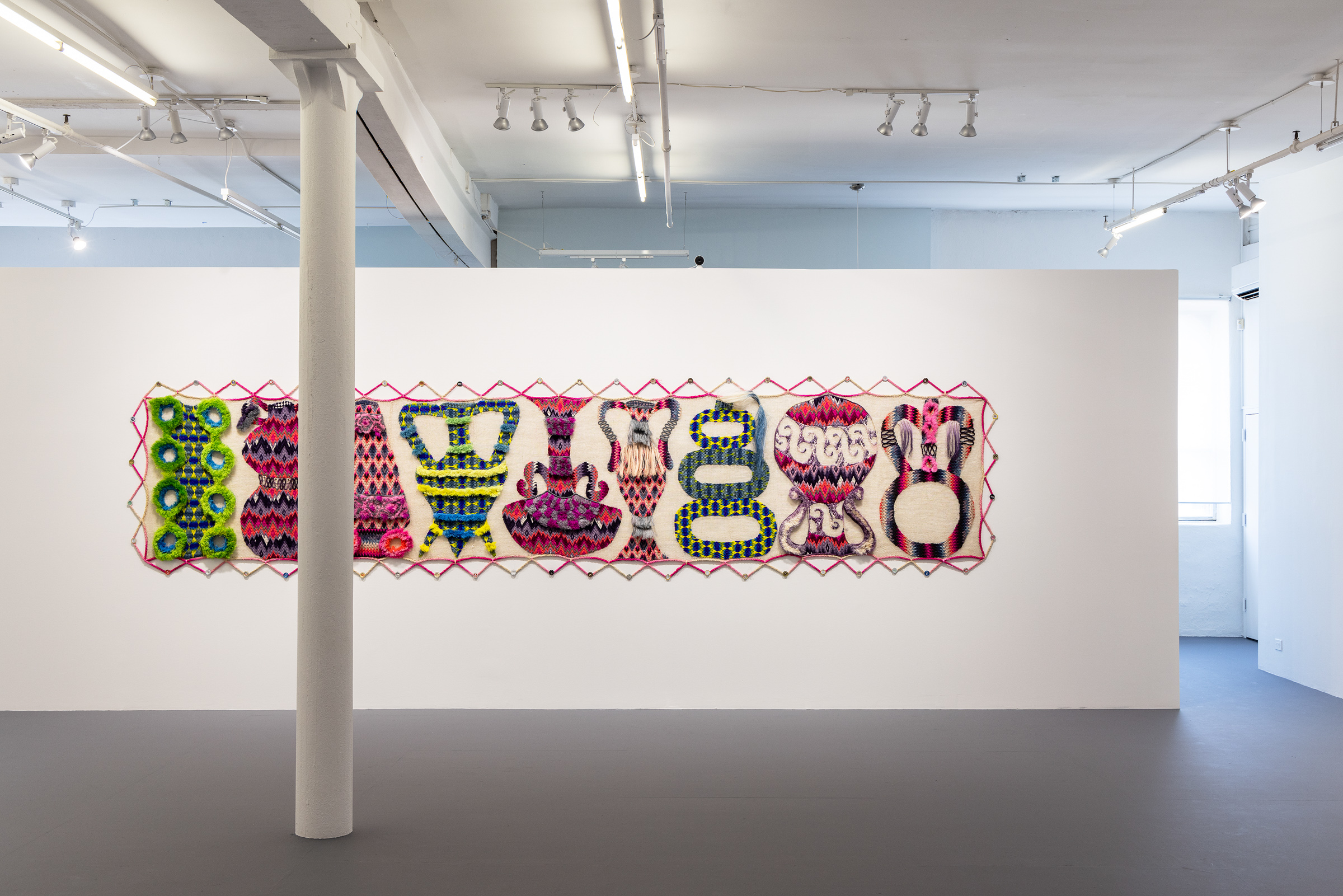
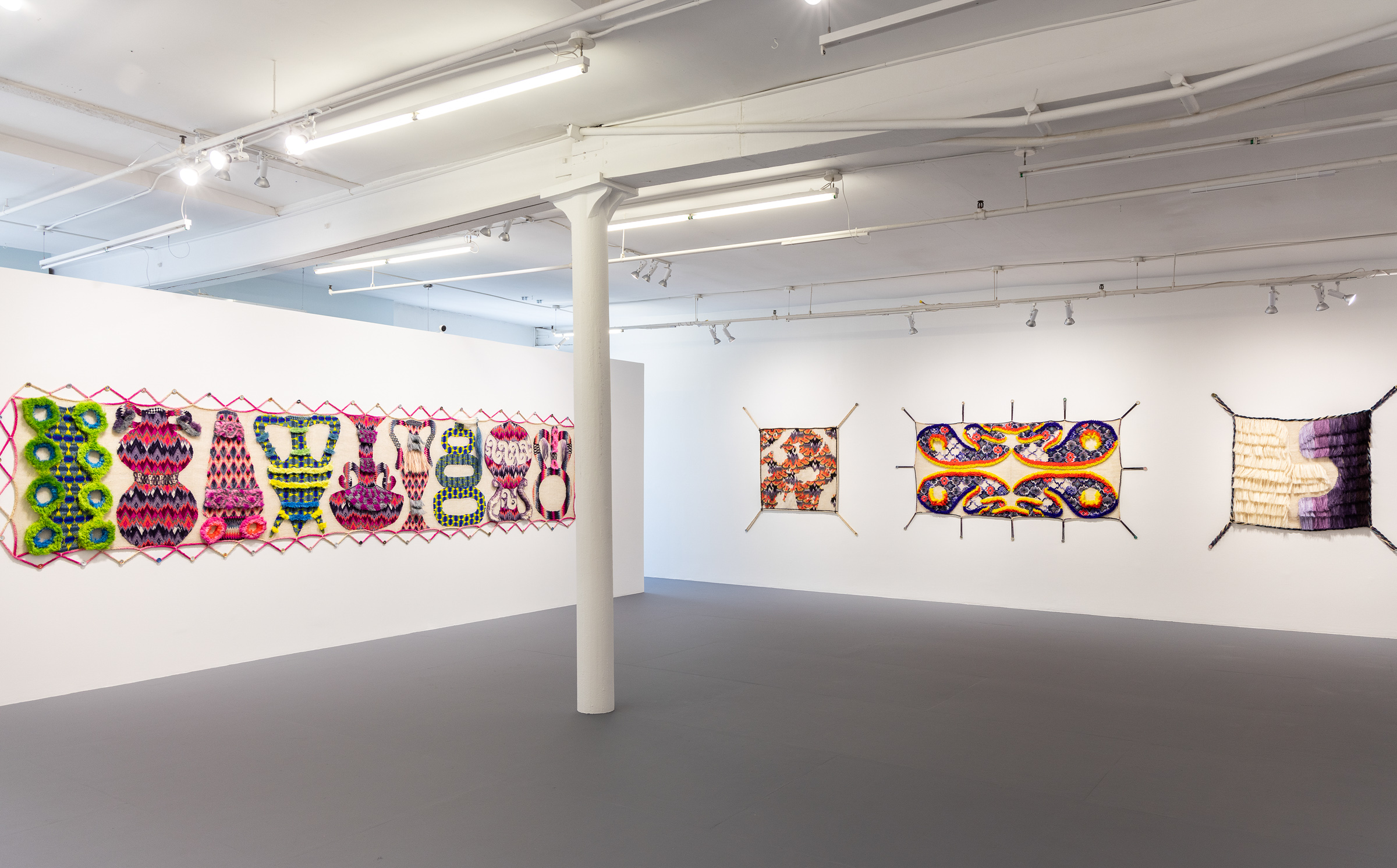
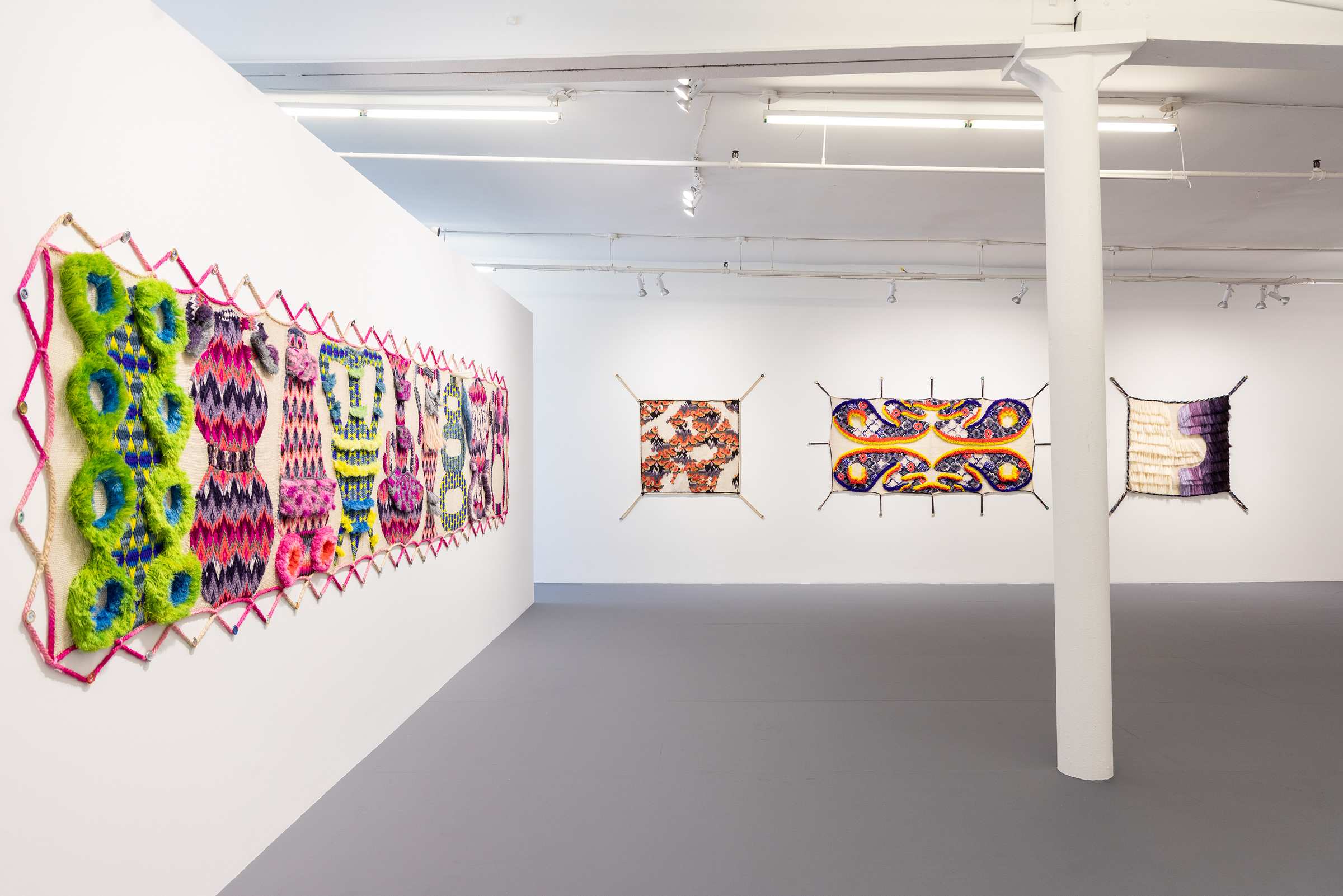
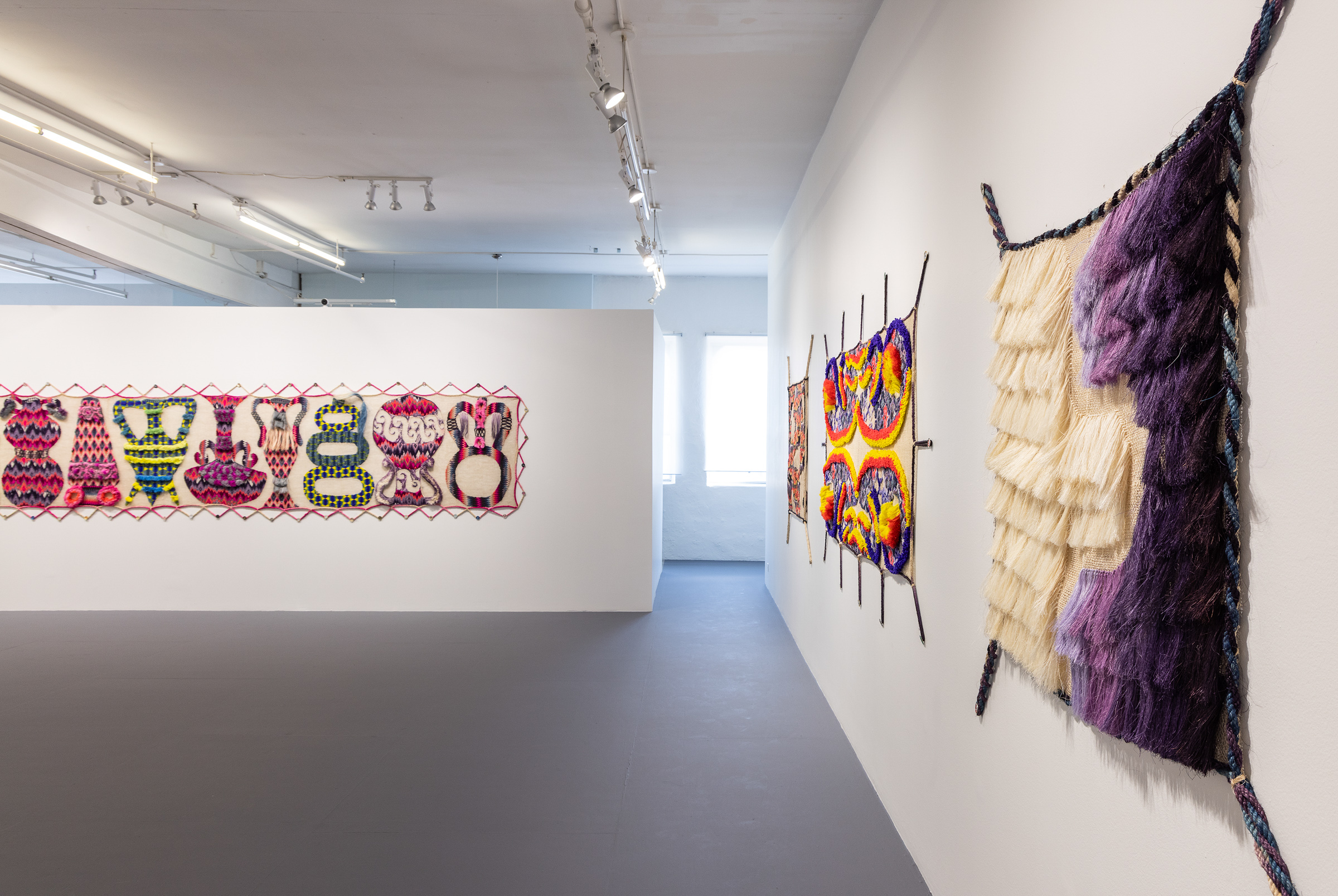
Photos by Paulina Ávila Esqueda
VIDEO INSTALL
Press Release
Tapetates: Threaded Memory
by Ana Elena Mallet
The title Tapetates carries within it a fertile polysemy. It relates to tepalcates, which are shards of pre-Hispanic ceramics, the memory of broken vessels that once contained water and ritual, and comes close to tepetates, which are volcanic geological strata, the hard soil that forms the mineral foundation of much of Mexico. It also evokes petates —pre-Hispanic palm weavings that delineate the ground for both domestic and ceremonial rituals— and also, of course, tapetes, textiles that bridge the materiality of the floor with the movement of the body. From this polysemic crossing comes forward the spirit of Aurora Pellizzi’s most recent series of works (2024–2025), a project that, like the superimposed layers of time, weaves meanings from the geological to the corporeal, from the archaeological to the modern.
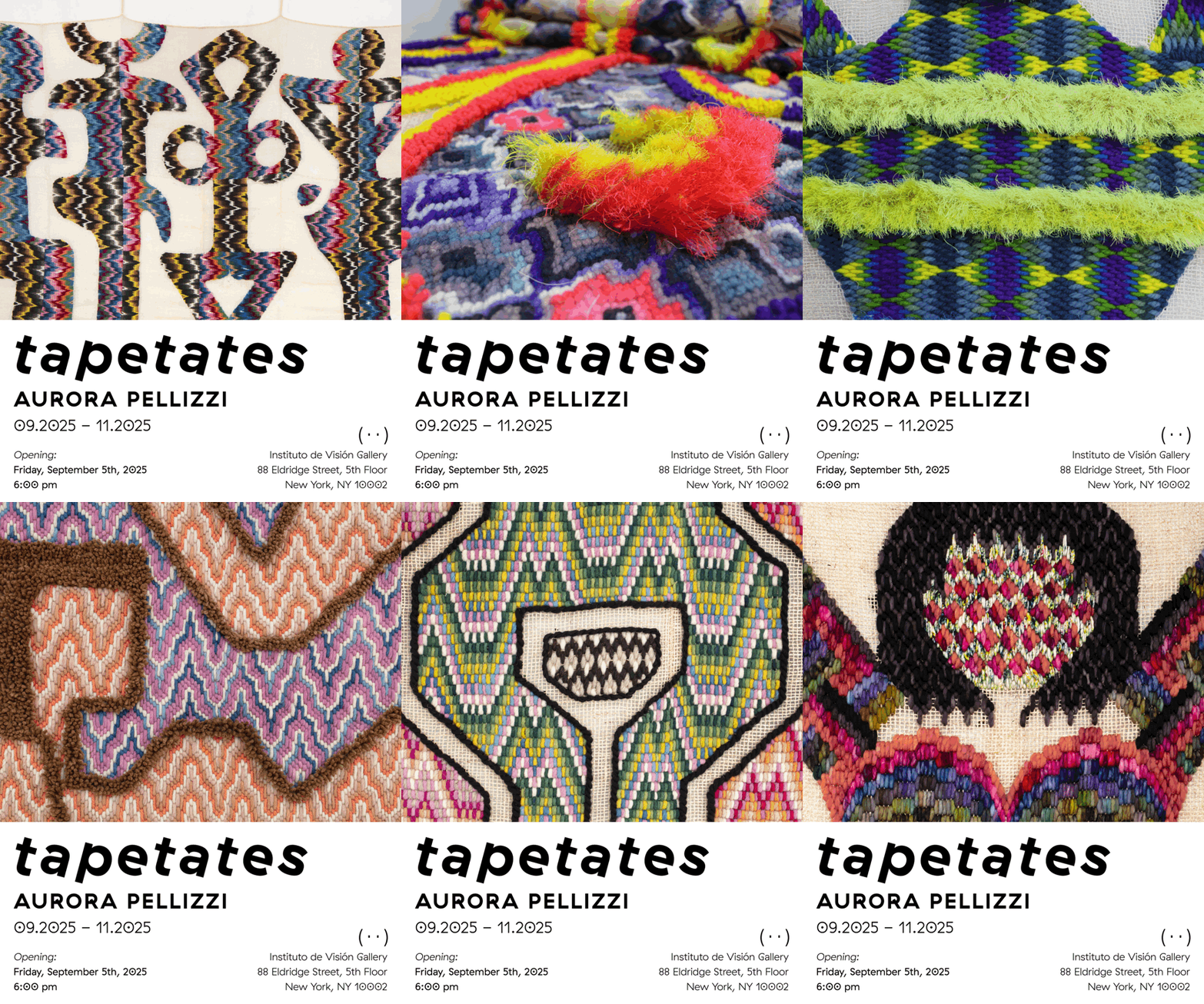
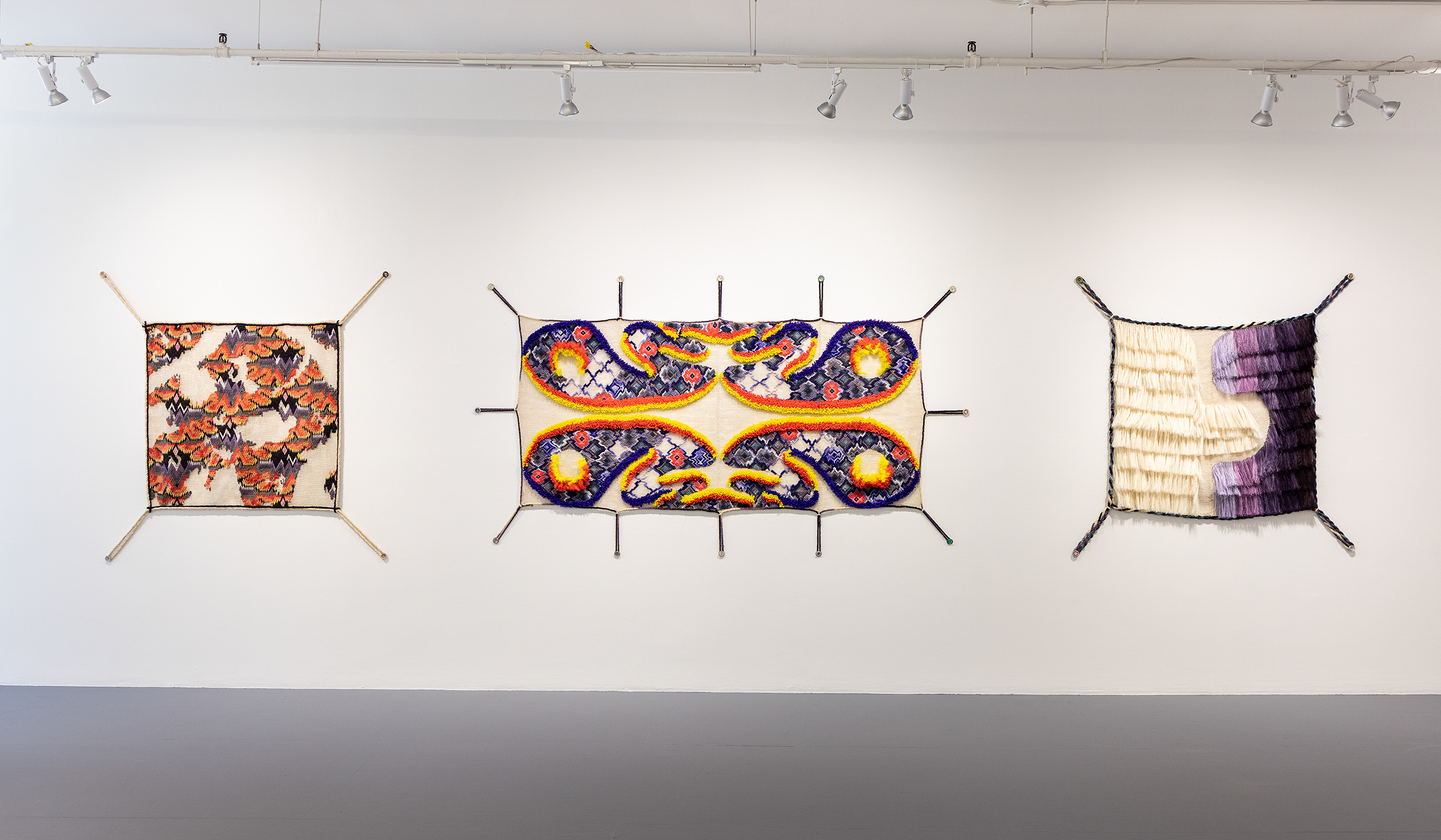
The exhibition brings together works created with the Renaissance technique of Bargello, a form of embroidery originating in 17th-century Florence that, through stepped stitches, imitates the effect of loom woven textiles. Its aesthetic produces flames, diagonals, and chromatic gradients capable of generating optical, almost three-dimensional illusions. The name comes from the Bargello Museum in Florence, where two surviving armchairs embroidered with the fiama stitch are displayed —red and orange flames that create fire within the textile surface. Aurora Pellizzi reclaims this historic technique and projects it into an expansive territory, in which aesthetic developments from the Renaissance echo in dialogue with Mayan codices, Egyptian friezes, modernist abstraction and 20th-century feminist and craft narratives.
The Bargello technique experienced an unexpected resurgence in the mid-20th century. The Arts and Crafts movement, hippie do-it-yourself culture, and the first feminist waves reclaimed practices once deemed “feminine,” “domestic,” or “minor.” Craft took on political connotations: making by hand meant rejecting machine-making; embroidering was a way to reclaim the dignity of women’s labor; stitching became a way to inscribe the body into the fabric of culture. Its psychedelic effects, based on repetitions, zigzags and color gradations, connected it to the aesthetics of the sixties and seventies: a hypnotic visuality that strained the border between ornament and abstraction.
In this series, Pellizzi does not simply revive the technique as an anthropological gesture; she makes it explode in unexpected directions. Wool and henequen threads, dyed with natural pigments ––and sometimes contrasted with fluorescent tones–– are threaded into hand-woven ayate cloth, hand-spun fibers that embody a slower, communal temporality. The support, far from being a neutral canvas, reveals itself and participates: its coarse, vegetal texture peeks through the figures and voids. What might appear as flat surface becomes a vibrant field where body, technique, and history interlace.
Works
Aurora Pellizzi enters a hybrid territory: abstraction that never fully renounces figuration. Her point of departure is the body, but not the natural, anatomical body, rather one that is dismembered, symbolic, transformed into silhouette or geometry.
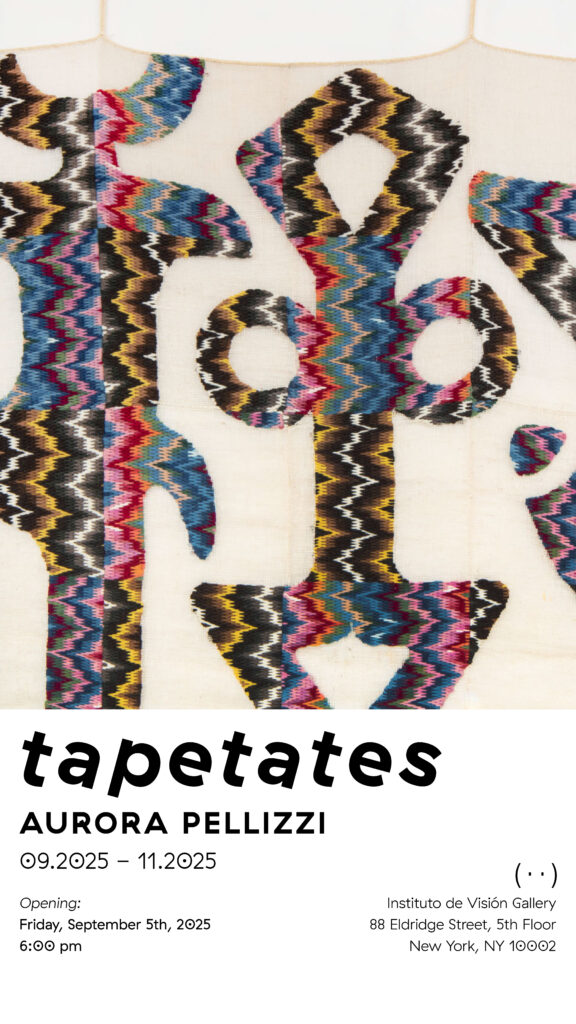
In Secuencia de Danza (Patchwork), bodies appear in a frieze format, schematic profiles that recall both Egyptian parading figures and Mesoamerican processions. This linear arrangement generates a visual rhythm, a narration in movement that speaks of choreography and ritual. Pellizzi places this archaic heritage in dialogue with the avant-gardes of the 20th century. The work alludes to the radical Cubism of Les Demoiselles d’Avignon, where Picasso incorporated African geometries to reinvent figuration, and at the same time to the works of Carlos Mérida, who carried the fiesta, the mask, and indigenous dance into modernist murals and stained glass.
In Pellizzi’s work, the body is never singular, always multiple. Fragments that juxtapose, silhouettes that fit or repel, volumes that strain against one another. The series becomes an exploration of how to represent the human without resorting to portraiture, how to abstract without losing the vital vibration of flesh.
The artist confesses her fascination with the frieze as an intermediate category: neither painting nor sculpture, neither fully decorative nor entirely narrative. The frieze, that continuous register running along walls and temples, has throughout history been a liminal space where figuration becomes schema, where volume flattens into sequence. For Pellizzi, the frieze is a model that allows her to think through the tension between the architectural and the artisanal, between the monumental and the intimate.
In Cabaret (las Tótems) geometric figures are arranged like dancing columns. But what is most significant is not the colored mass, but the interstices. The void between figures reveals the ayate, the warp that supports, as if reminding us that what binds is as important as what separates. Thus the work questions the traditional hierarchy that considers the frieze a “minor art”: here the minor becomes a portal to the essential, to the possibility of rethinking art history from the margins.
In Tepalcates, Pellizzi celebrates another craft medium: ceramics. Here figuration abandons the body to focus on inert objects: vessels, fragments, remnants that point back to clay as primal material. The artist explores how ceramics and textiles converse: many pre-Hispanic jars imitate woven patterns in their decoration, as if the vessels dressed themselves in painted fabrics, disguising one medium as another. In this play of cross-imitations, Pellizzi reveals the porousness of disciplines: clay that wants to be textile, textile that becomes archaeological.
Tepetate Tepeyac introduces a geographic and spiritual layer. The mosaic of textile fragments evokes the volcanic rubble floors joined by white mortar that cover the sanctuary of the Virgin of Guadalupe, but also the modernist walls of Mexico City. The work thus articulates geology, urbanism, and popular religiosity. What once seemed residue—tepalcates, volcanic stone, textile fragments—becomes paved memory: a surface narrating the continuity between geological strata, collective devotion, and architectural modernity.
In Stracci (Texcoco), the artist explores textile’s inherent fragility. The frayed fabric resembles a map of erosions, overflowing lakes, waters returning to flood the valley. The material’s disintegration reveals its ephemeral condition: despite the laborious process, textile will always be subject to entropy, to unraveling and loss. Pellizzi turns that deterioration into a metaphor for geography and memory: bodies and landscapes alike are destined to erode.
Metamorphosis becomes explicit in Heket Quimbaya, a piece inspired by a pre-Columbian gold object representing a frog. Here the animal figure functions as a symbol of transmutation: the amphibian, inhabiting two worlds, becomes an allegory of art’s ability to migrate from one medium to another. Like the frog, Pellizzi’s textiles leap between the human and the zoomorphic, the artisanal and the architectural, the ephemeral and the monumental.
Ensamble questions the notion of unity. Here the interest lies not in the finished figure but in the parts that may or may not fit together. Pellizzi reveals that the body —and culture, by extension— is nothing more than a mosaic of fragments that sometimes articulate harmoniously and other times remain dislocated. The metaphor expands: societies, histories, and territories are also failed joinings, unresolved tensions that nevertheless constitute their richness.
If anything characterizes this series, it is the way it challenges the idea of craft by expanding its scale. What begins as hand embroidery unfolds into architectural and geological scales. Bargello, once the technique of armchairs and cushions, becomes here a textile mural, monumental frieze and topographic landscape. The threads, dyed with indigenous techniques, vibrate like petrified lava or overflowing water; the ayate, woven from henequen, inscribes the work within a campesino and Mesoamerican genealogy, linking the individual gesture of the embroiderer to the collective history of fibers and backstrap looms.